
x

By Mariana Hagström
Avokaado Founder & CEO

Despite the abundance of software solutions, companies have less control and oversight over their contracts than before. Administrative burden has overwhelmed lawyers, while slow contract negotiations have frustrated sales teams. Static PDF contracts prevent CFOs from seeing each contract's financial obligations.
Delays and disorganization in contract management lead to lost revenue, with companies losing an average of 9% annually. The problem with CLM solutions today is not a lack of functionalities but how each was built. Most were designed to replace paper filing cabinets and do not provide structure for existing data and contract processes.
In 2026, the highest-performing contract lifecycle management software solutions will not simply store documents but convert them into contract data that businesses can use for strategic decision-making. This article provides an in-depth comparison of the top solutions available today, identifying legacy systems as traditional filing cabinets versus newer platforms that deliver contract intelligence.
The first step in choosing the right contract management software is to understand why many traditional solutions result in inefficient contract management. Most traditional applications serve mainly as digital file storage for contracts. Users upload contracts, attach a few dates, and expect to find the contract later. This creates three major inefficiencies:
Contract Lifecycle Management CLM software automates every phase of a contract’s lifecycle, from creation to renewal. It provides an integrated approach to contract management, rather than using separate software programmes for each phase. This single source provides all the necessary support from the Legal, Sales, HR, and Procurement teams.
With CLM software, modern contract management processes are completed on no-code platforms, allowing business users to generate contracts from pre-approved templates while maintaining control over the contract language and complex workflows. The end goal is to speed up time-to-contract without increasing compliance risk.
In the past, CLM tools were used only by legal professionals, but today the best CLM tools support users across an organization with different contract management needs.
Here is our in-depth review of the top platforms, designed to help you find the best fit for your organization's contract management processes.
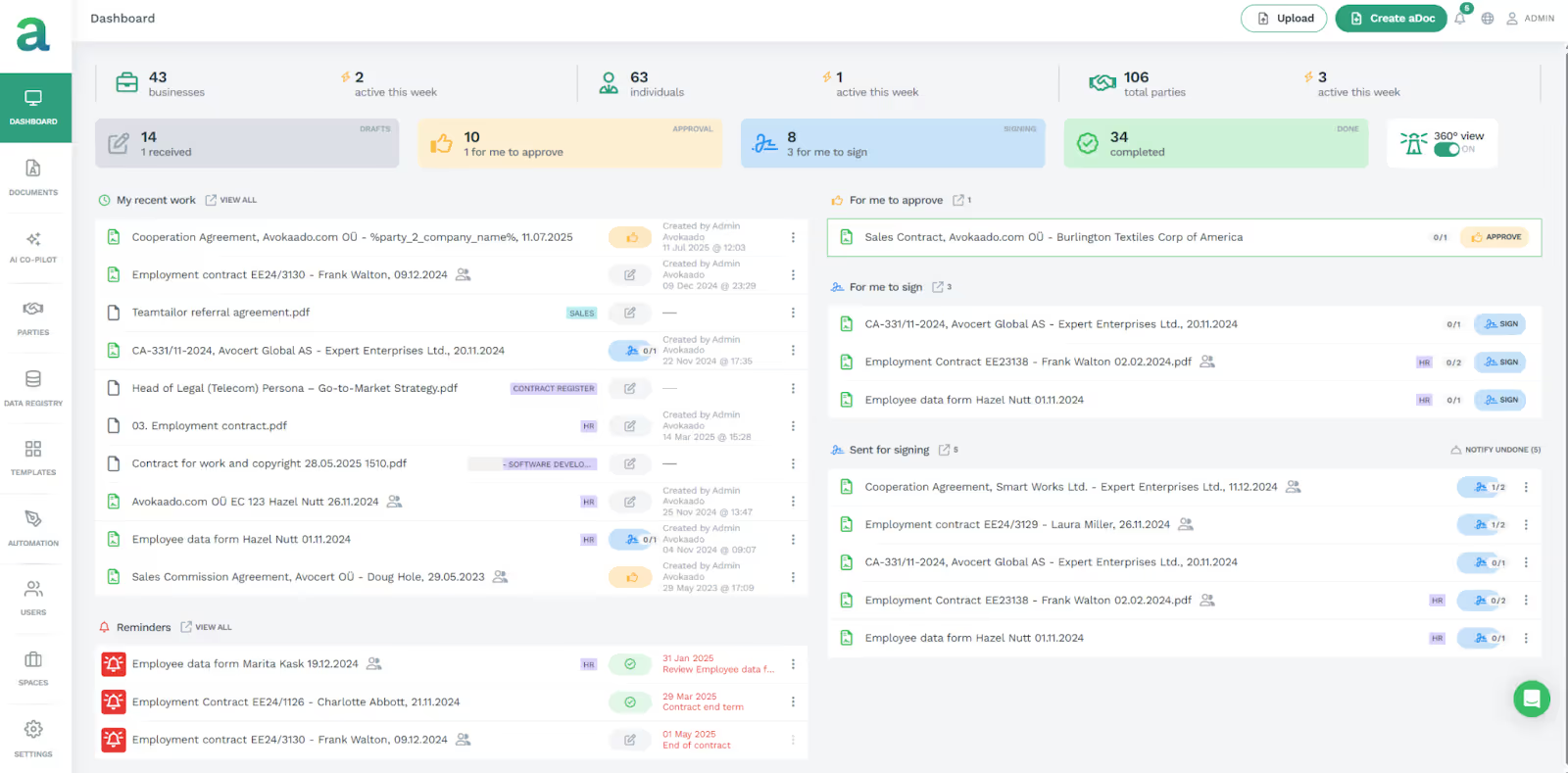
Avokaado has a unique perspective on Contract Lifecycle Management (CLM). While most CLMs treat contracts as documents, Avokaado treats them as structured data from the start. This data-first approach makes Avokaado ideal for organizations that want to move beyond storing contracts and realize contract intelligence.
Avokaado was built for organizations seeking both contract automation and compliance, which is why it has found its niche in regulated industries such as banking, financial services and insurance, telecom, and healthcare. By treating every agreement as a dynamic data asset, Avokaado gives business teams a unified workspace to safely self-serve on routine contract creation. At the same time, the legal department provides ongoing oversight, risk, and compliance monitoring.
Avokaado addresses the inefficiencies of manual contract management, which can lead to poor practices and financial impacts, by creating a scalable, intelligent, and collaborative environment that enables organizations to manage the complete contract lifecycle more effectively.

Avokaado’s Avo AI transforms NDAs, MSAs, and other contracts into structured, independent AI agents using its 5D Engine™. These agents manage the entire contract lifecycle by combining deal context, document structure, data models, decision rules, and dialogue strategies.
Unlike traditional CLM platforms that add AI tools to existing workflows, Avokaado is built for AI from the start. Each contract becomes a system that can draft, review, negotiate, and manage itself based on your rules. What's more, Avokaado's agents operate within clear contract boundaries and perform specific actions in line with your organization's rules, such as playbooks, policies, and workflows.
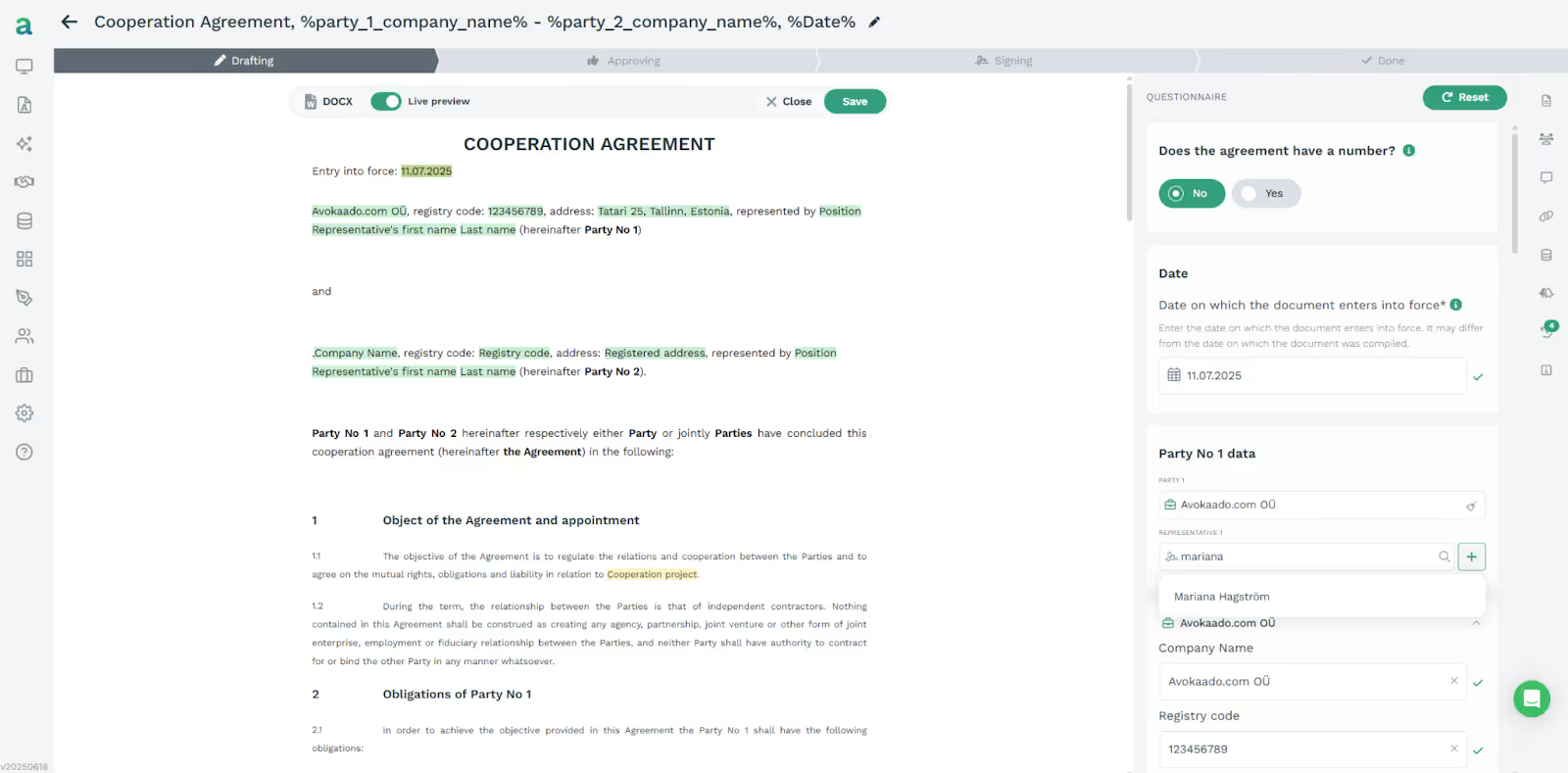
The core of Avokaado is the aDoc format, developed as its proprietary document format. It is not a template; aDoc is a dynamic, clause-based structure that connects the document content, data variables, and automated workflow.
Each clause in aDoc has reusable version control stored in the clause library, so all contracts generated from aDoc are standardized and compliant from the start, eliminating risks from manual drafting. In-house legal teams can create a library of pre-approved language to use across thousands of contracts without concern that unauthorized parties will modify it.
Since every contract contains structured data, Avokaado's no-code workflow automation is highly flexible. Any data field in the contract can trigger an approval route, such as contract amount, counterparty jurisdiction, included clauses, or risk score, creating configurable and complex workflows without IT assistance.
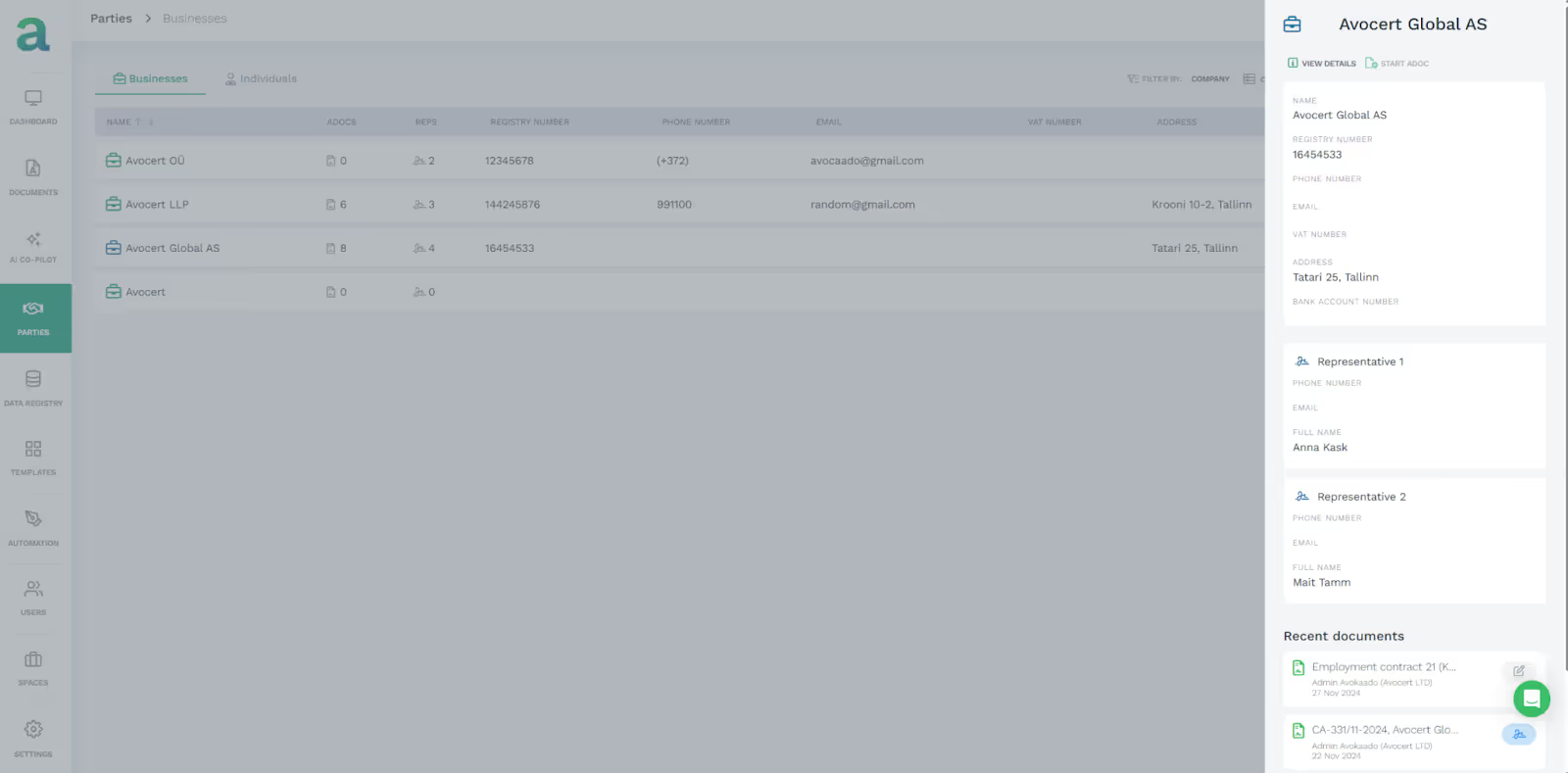
Avokaado provides an easy-to-use, modern interface that enables team collaboration, both internally and externally, on the same platform.
All stakeholders can negotiate and redline contracts within a secure, web-based environment, with a full audit trail that logs each change, ensuring complete transparency throughout the process. The platform works with existing tools such as Slack, Microsoft Teams, and email, enabling stakeholders to collaborate in the way that feels most comfortable to them.
The platform provides centralized contract management resources and serves as a smart contract database. All metadata, clauses, and obligations in each contract are captured, indexed, and stored, providing a comprehensive, searchable database of the entire organization's contracts for real-time analytics and risk management.

Avokaado was built from the ground up with the stringent requirements of the EU's data privacy legislation as its foundation, including GDPR compliance. It is an ideal solution for companies with strict compliance and data-sovereignty requirements. It also implements granular access controls, audit logs, and encryption at rest and in transit, providing strong protection of sensitive contract-related data.
Unlike traditional CLM providers that require extensive professional services and complicated customization, Avokaado is designed for rapid implementation. An organization can implement its first use case in days rather than months, creating a short time-to-value and momentum for further adoption across the organization.
This platform is best suited for enterprises in regulated industries such as fintech, telecom, and insurance, as well as for scale-ups managing over 100 contracts a month.
It is ideal for those needing integrated contract intelligence, e-signatures, approval workflows, and compliance tracking in one place. Legal teams can also use it to move from being cost centers to strategic business partners by using data-driven insights.
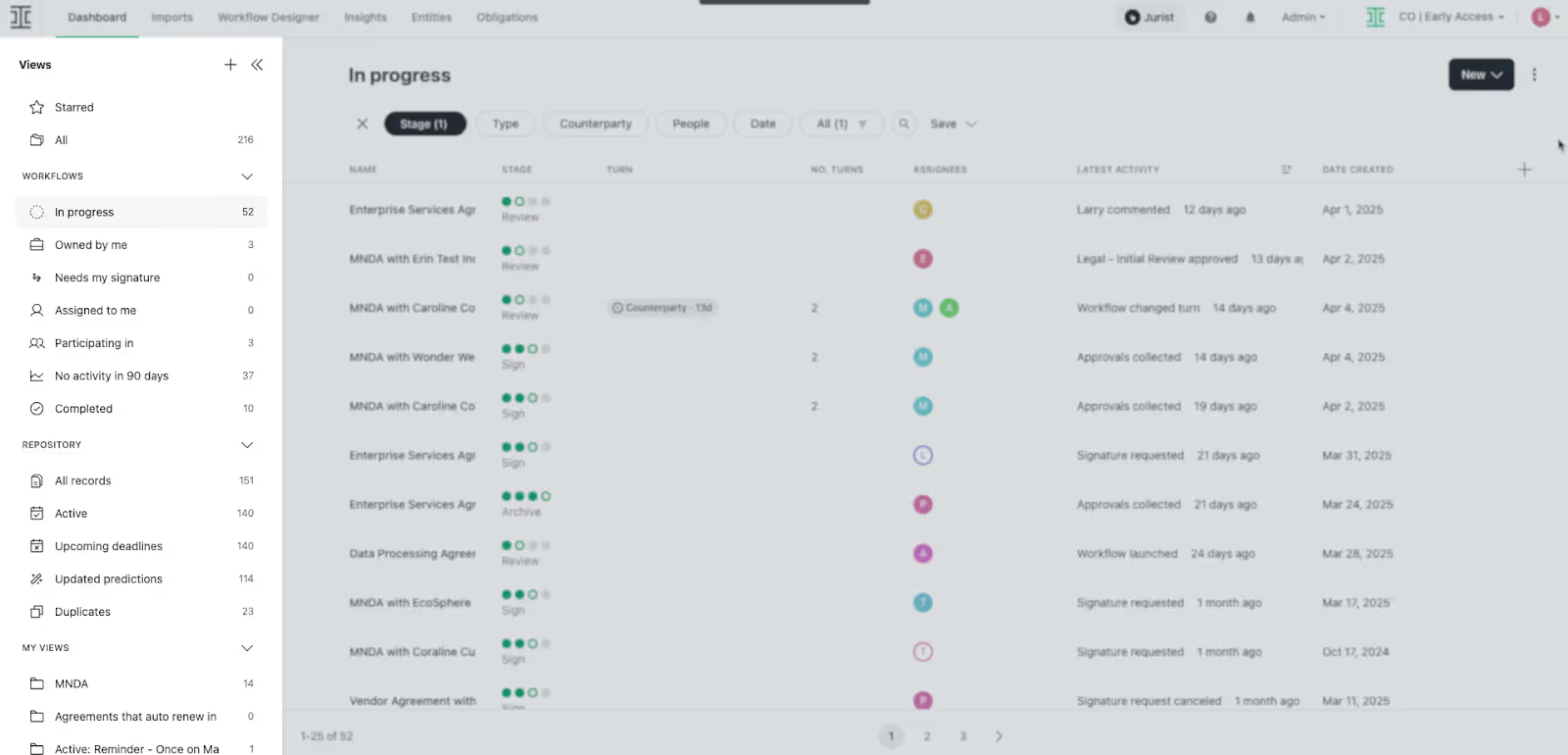
Ironclad is a digital contracting platform for digital-first companies. It has a simple, intuitive UI for legal and business professionals. Many users report satisfaction through customer reviews, G2 ratings (4.5/5), and a 94% would recommend rating. Recently, it launched Clickwrap, which lets businesses create, execute, and manage online agreements with a single button or checkbox.
Digital workflows, real-time collaboration, compliance capture, automated contract data tagging, a central repository, custom approval flows, and AI-based contract drafting speed.
Ironclad is best suited to mid-to-large technology companies with their own legal ops teams that desire a user-friendly interface, robust Salesforce Integration, and organizations willing to spend on premium price tiers to reduce training/overhead and achieve rapid user adoption.
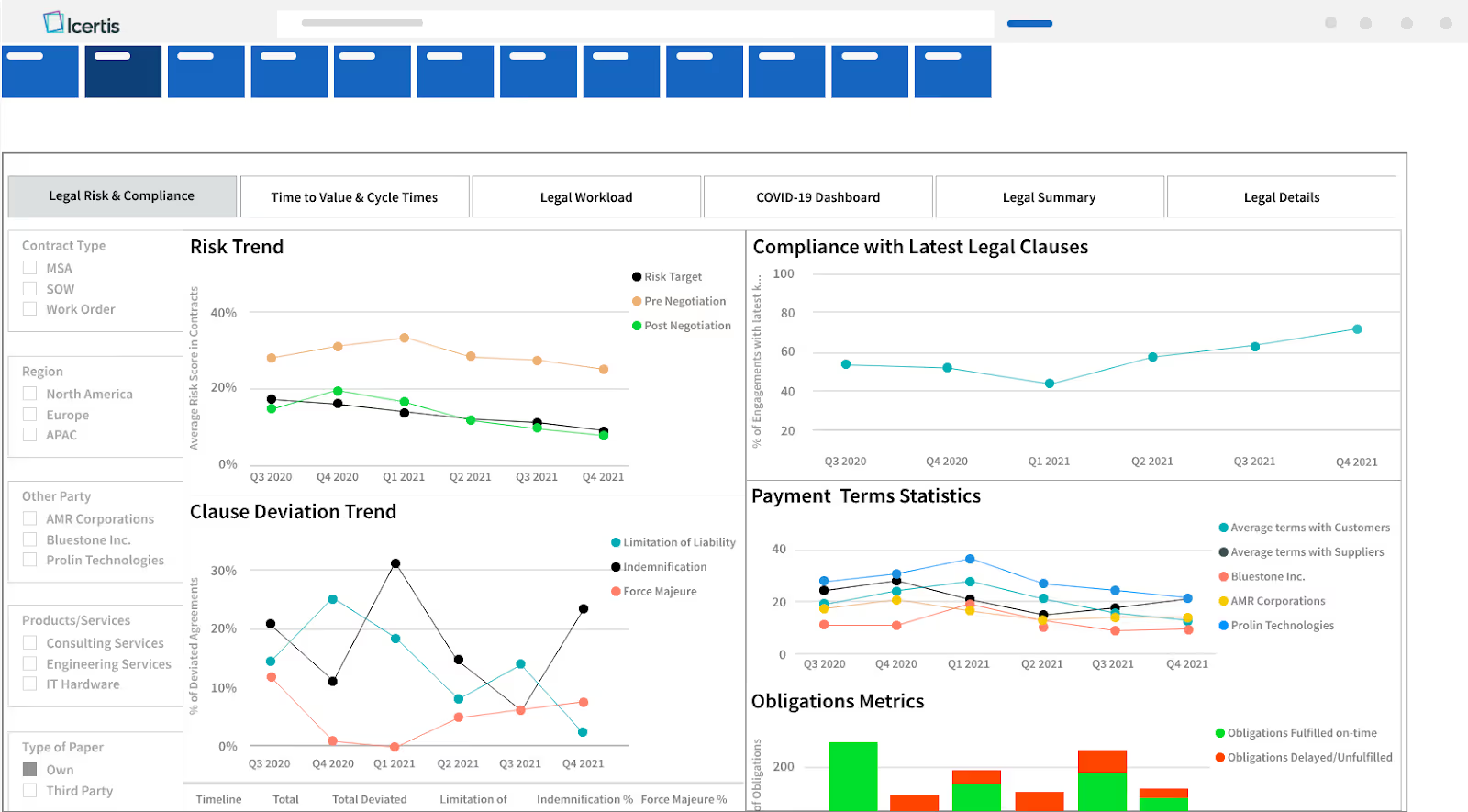
Icertis is recognized as a Leader in the Gartner Magic Quadrant for its comprehensive CLM capabilities and integration with enterprise systems. With a G2 rating of 4.2/5, it is the CLM provider of choice for large Fortune 500 companies using SAP, Dynamics, and Oracle integration.
Core Features
AI-driven contract creation, automated contract management, proposal management, compliance tracking, and analytics. It also offers advanced tools to manage and align performance obligations with payment. It provides risk, compliance, and governance tools, along with dashboards, to analyze risk from internal and external data sources.
Enterprises operating in highly regulated industries are heavily dependent on deep integration with ERP/CRM systems and require comprehensive compliance-tracking capabilities.
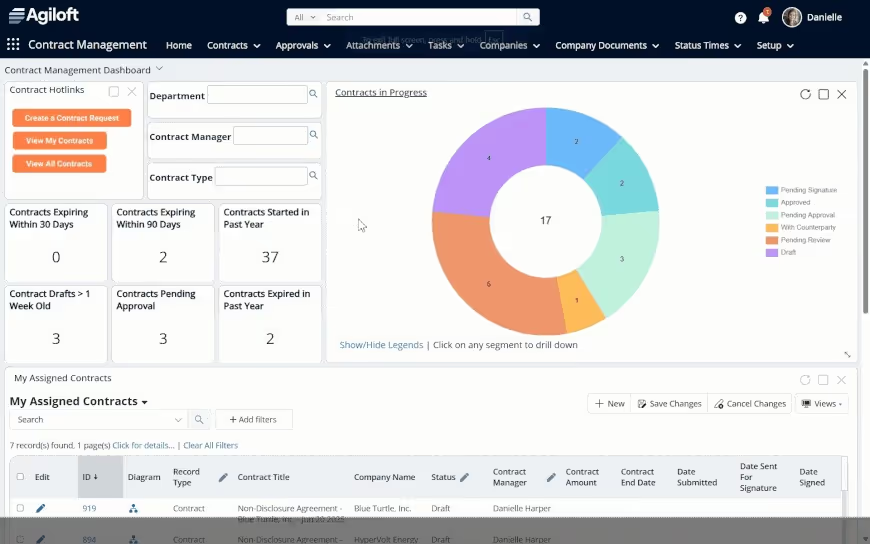
Agiloft is a no-code customization platform that lets users design configurations like workflows, forms, dashboards, and access levels without developer assistance. This flexibility and ease of use have earned Agiloft a G2 rating of 4.6/5, making it a leading vendor for organizations needing customized workflows.
The platform meets military-grade security requirements and includes features like automatic data backups, antivirus and malware protection, and measures to prevent unauthorized access. These features support organizations that handle sensitive information.
Workflows, contract management, and approvals with no-code functionality, AI-powered metadata extraction, and risk assessment. The platform offers automated workflow approvals for contracts with unlimited options, as well as unlimited customizable reports and dashboards. It integrates with Salesforce, MS Teams, DocuSign, Adobe Sign, and other enterprise-level applications. It also provides compliance support for regulations such as SOC 2, HIPAA, and GDPR.
Organizations with highly customized internal business processes. Mid-market to enterprise organizations in regulated industries with flexible security configurations, willing to invest in lengthy implementation for process alignment.

Sirion effectively analyses and manages over five million contracts in more than 70 countries using Artificial Intelligence, generating new insights about post-signing administration. Sirion uses advanced analytics to help all parties involved in each contract maximise its value by aligning performance with payment and preventing disputes.
The Sirion platform includes contract document creation and maintenance, AI-based contract performance analysis, automated workflows using AI data extraction, and auto-generated clause libraries to support team-based contract creation.
It also offers automated monitoring and tracking of compliance with laws and regulations, as well as vendor and spend management toolsets. Users gain visibility into contracts through AI-powered conversational tools that answer questions in plain language and provide AI-based redlining recommendations to shorten deal flow and improve efficiency.
Large corporations with complex supplier relationships require post-signing governance and performance analysis. Procurement departments need AI-powered insights to optimise performance and mitigate supplier risks. Corporations that prioritise realising financial value from contracts over simply automating workflow.

Evisort is a software-as-a-service agreement intelligence solution. Its founders are graduates of Harvard Law School and MIT. Evisort delivers ROI within 30 days by centralizing your entire contract library with no migration required. Its AI automatically searches the contract library for metadata and specific terms, allowing users to create new contracts from that information without manual data entry.
Users can also create, review, approve, sign, and report through intelligent dashboarding. Intelligent Dashboarding provides self-populating dashboards that instantly present comprehensive visual contract metrics derived from metadata across multiple Word documents or PDFs.
AI Contract Analytics, Contract Automation, centralized contract repository, full enterprise software integration, risk mitigation approval processes, immediate file and folder synchronization, automatic metadata extraction with real-time display, and comprehensive contract visibility without custom dashboards.
Large organizations with many legacy contracts need immediate digitization. Legal departments are more interested in AI Contract Analytics than in developing workflows. Companies between mid-market and large enterprise seeking quick ROI without long implementation delays.
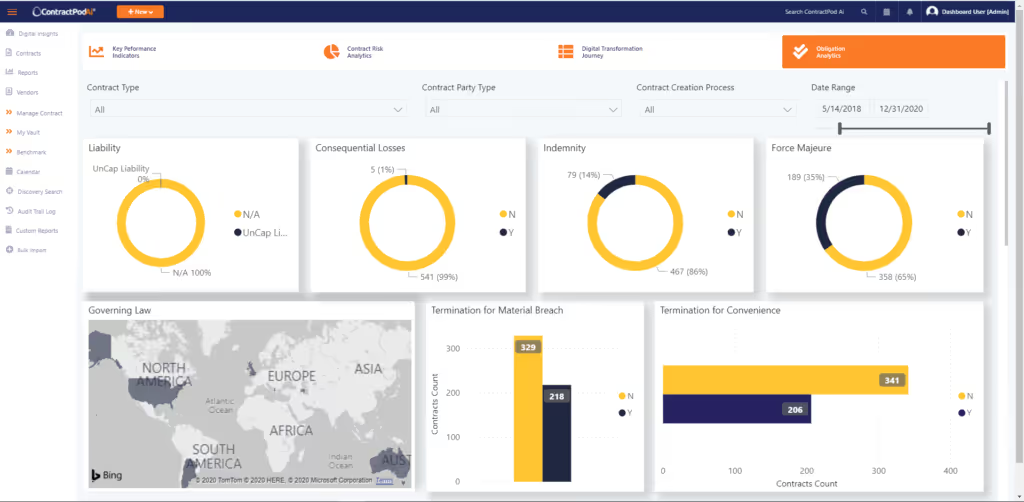
ContractPodAi is recognized in Gartner's Magic Quadrant for its GenAI-driven CLM through Leah Intelligence. Its Agentic Architecture enables users to manage contracts intuitively and interactively, thereby improving efficiency and accuracy. ContractPodAi helps legal departments shift from cost centers to strategic growth enablers.
ContractPodAi's main features include Leah GenAI for contract drafting and review, support for over 40 languages, flexible pricing, AI-driven risk assessments, and automated compliance tracking. It integrates with enterprise systems to improve governance and risk visibility. ContractPodAi also has a diverse partner network and multiple implementation options.
Mid- to large global enterprises that require multilingual support for their products, as well as organizations that would like to access conversational AI capabilities to reduce training overhead, and ContractPodAi enables legal departments to leverage agentic AI to assist with strategic business decisions rather than simply automating routine tasks.
Digital transformation is reshaping contract management. Leading contract lifecycle management (CLM) solutions now provide strategic value by enabling deeper contractual insights. With advanced technologies such as Artificial Intelligence (AI), Machine Learning (ML), and a data-first approach, contracts can become intelligent, automated agreements that support your company's objectives.
Whether you work in Legal, Sales, or Procurement, modern platforms can transform your contract management processes. When choosing a contract lifecycle management platform, assess its compatibility with your existing systems and its ability to leverage AI and ML for greater value.
To learn more about transforming your contract processes with contract intelligence, visit us to see how a modern Contract Intelligence Platform can provide your team with greater visibility, control, and efficiency.
Request a demo to discover how a data-first approach supports effective contract management and drives your organisation's success.
See how Avokaado replaces chaos with clarity by automating manual work, cutting delays, and giving you full visibility across every document.
Book a demo
